

How to Improve a Product Page in eCommerce for Higher Sales
How timing, cognitive load, and one simple UX principle can significantly increase conversions.
Go Back
How timing, cognitive load, and one simple UX principle can significantly increase conversions.
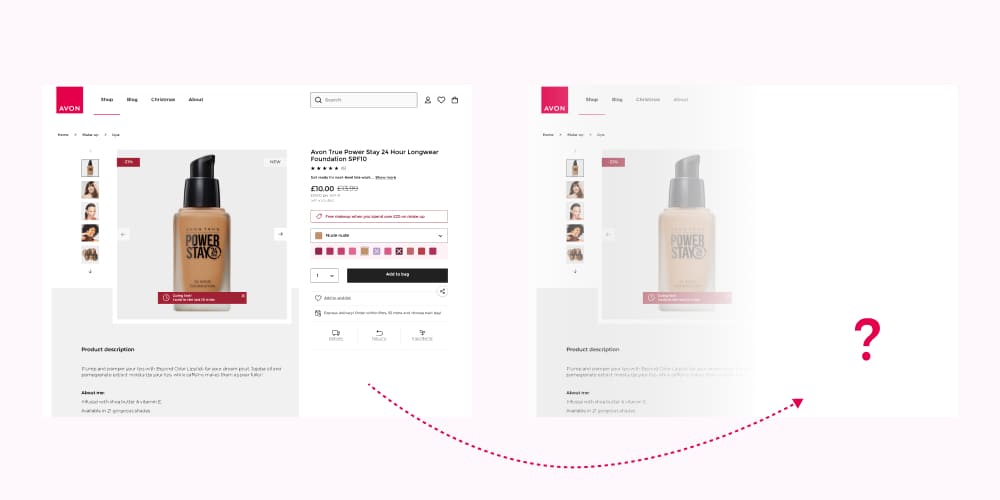
TL;DR
Higher-converting product pages reduce cognitive load and build trust at the right moment. Focus on clear information, confident buying cues, and relevant recommendations.
Do you know what actually makes a good product page in eCommerce?
Most people will tell you:
good images
clear price
strong CTA
product description
And yes, those are the basics.
But basics don’t scale revenue on their own.
What really improves sales is understanding where the customer is in their decision-making process and acting at the right moment.
Before we talk strategy, let’s be clear: a product page must cover fundamentals.
At minimum, a good product page includes:
clear product title
high-quality images (multiple angles, context)
price and delivery information
trust signals (reviews, ratings, guarantees)
clear CTA (Add to cart / Buy now)
concise but helpful product description
These elements reduce friction and help users decide.
But once the decision is made, something interesting happens.
One of the most valuable sales lessons I learned from sales trainers is the 1+1 technique.
The idea is simple:
When someone has already decided to buy, it’s easier to sell them one more thing.
Why?
Because the hardest part of the shopping cycle is already over.
At that point, the customer has:
researched
compared options
evaluated price
built trust
decided yes
That process carries a high cognitive load.
Once the decision is made, the cognitive load drops dramatically.
And that’s exactly where upselling and cross-selling work best.
When someone adds a product to the cart, they are no longer asking:
“Should I trust this brand?”
“Is this the right product?”
They are already convinced.
At this stage:
trust is built
resistance is low
relevance matters more than persuasion
If you now present:
something small
something relevant
something that complements the main product
Most users will say yes! Because it makes sense, not because they’re being pushed.
I first learned this principle while designing eLearning training programs, but the concept didn’t come from design. It came from sales.
The sales team used to teach this to Avon Representatives in a super practical way:
When a customer is already buying a lipstick, offer them a lip liner with it.
Someone wants a mascara? Offer an eyeliner that fits the look.
Small add-on. Same context. Easy decision.
Later, I applied the same logic in UX design for eCommerce platforms.
The psychology didn’t change, only the context did.
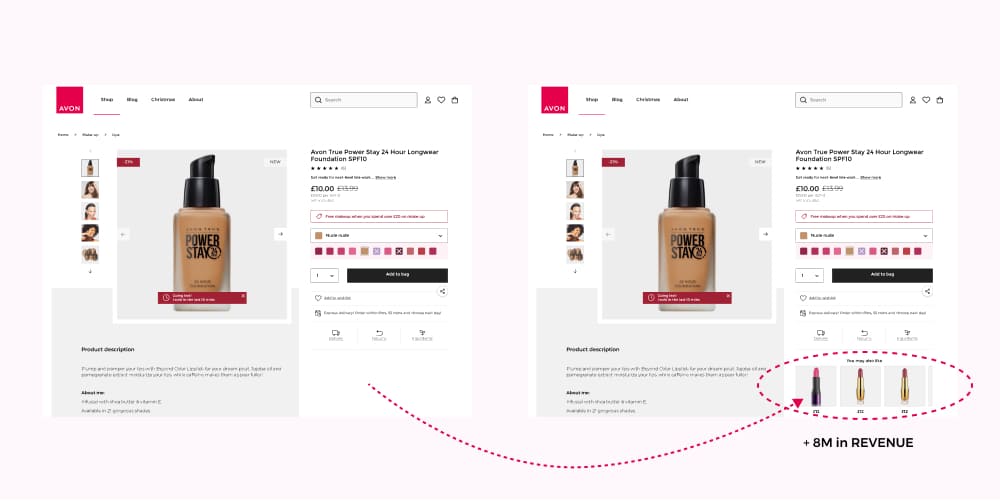
On an eCommerce platform I worked on, I introduced a very simple feature on the product page:
a section with similar or complementary products
placed directly underneath the main product
Nothing flashy.
Nothing aggressive.
Just relevant options at the right moment.
To a common user, it looked like a small UX improvement. Irrelevant.
To the business, it resulted in an
additional $8 million in revenue in a single quarteron the Avon Shop website.
Brilliant, no?
That’s the power of timing + relevance.
This is not a “secret trick.”
You already experience it daily.
Big eCommerce platforms use it with:
“Customers also viewed”
“Frequently bought together”
“Similar products”
Majority of the times placed lower on the page.
Different implementation.
Same psychology.
Improving product pages is not just about design polish.
It’s about:
understanding cognitive load
respecting the user’s decision journey
offering additional value
aftertrust is built
Once you understand the psychology, the implementation becomes flexible:
similar products
complementary services
bundles
add-ons
The format can change.
The principle stays the same.
If you want to increase sales, don’t ask:
“How do I push more?”
Ask:
“When is the user ready for more?”
That’s where UX, psychology, and sales meet.
And if you need someone who understands all three and knows how to implement them strategically
→ Book a call with me and let’s optimize your product experience properly.
Everything you read here is written by me.
I use AI daily. I won’t hype it, because plenty of people already do.
For me, it’s just a tool, something I use in my day-to-day work, and here mainly for formatting or language polish, since English isn’t my first language.
The thinking, experience, opinions, and voice are always mine.